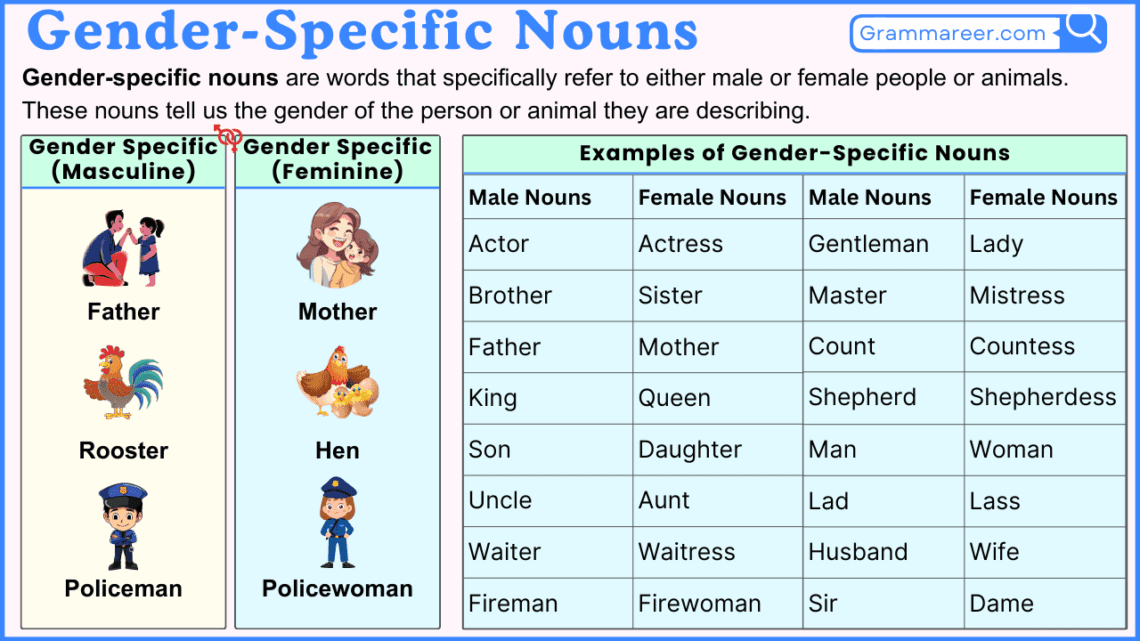
Gender-specific nouns are words in English that indicate the gender of a person, animal, or character. These nouns help clarify whether the subject of a sentence is male or female. Examples of gender-specific nouns include “actor” (male) and “actress” (female), or “prince” (male) and “princess” (female). Understanding these nouns helps to add detail and clarity to your sentences.
Table of Contents
What Are Gender-Specific Nouns?
Gender-specific nouns refer to nouns that denote a particular gender. For example:
- Male-Specific Noun: Words that indicate a male gender, such as “king” or “actor.”
- Female-Specific Noun: Words that indicate a female gender, such as “queen” or “actress.”
Using Gender Specific Nouns allows writers and speakers to provide more detail about the subjects in their sentences. Although modern English often uses gender-neutral terms for inclusivity, knowing gender-specific nouns can still be helpful.
Examples of Gender-Specific Nouns
Gender-specific nouns can be divided into a few main categories based on the type of roles or relationships they describe. Here are the common categories with examples:
1. Family Relationships
Family roles often have gender-specific nouns. This helps specify male and female family members distinctly.
| Male | Female |
|---|---|
| Father | Mother |
| Son | Daughter |
| Uncle | Aunt |
| Nephew | Niece |
| Grandfather | Grandmother |
| Husband | Wife |
| Brother | Sister |
2. Occupational Titles
Traditionally, certain professions or titles had male and female forms. Modern language often uses gender-neutral terms, but gender-specific forms still exist.
| Male | Female |
|---|---|
| Actor | Actress |
| Waiter | Waitress |
| Steward | Stewardess |
| Hero | Heroine |
| Host | Hostess |
3. Animal Terms
Many animals have specific terms for males and females. Knowing these can be useful for understanding biological distinctions or in literature.
| Male | Female |
|---|---|
| Lion | Lioness |
| Bull | Cow |
| Rooster | Hen |
| Stallion | Mare |
| Drake | Duck |
| Buck | Doe |
| Gander (goose) | Goose |
4. Titles of Nobility and Honorifics
Nobility and titles often have distinct gender-specific forms, especially in historical or royal contexts.
| Male | Female |
|---|---|
| King | Queen |
| Duke | Duchess |
| Emperor | Empress |
| Prince | Princess |
| Lord | Lady |
5. General Descriptors
Some general terms for people also have male and female versions. These descriptors are often used in formal or respectful contexts.
| Male | Female |
|---|---|
| Man | Woman |
| Boy | Girl |
| Gentleman | Lady |
| Bachelor | Spinster |
List of Gender-Specific Nouns
| Male Nouns | Female Nouns |
|---|---|
| Actor | Actress |
| Brother | Sister |
| Father | Mother |
| King | Queen |
| Son | Daughter |
| Uncle | Aunt |
| Waiter | Waitress |
| Fireman | Firewoman |
| Policeman | Policewoman |
| Duke | Duchess |
| Grandfather | Grandmother |
| Bull (animal) | Cow (animal) |
| Rooster (animal) | Hen (animal) |
| Hero | Heroine |
| Wizard | Witch |
| Groom | Bride |
| Gentleman | Lady |
| Master | Mistress |
| Count | Countess |
| Shepherd | Shepherdess |
| Man | Woman |
| Lad | Lass |
| Husband | Wife |
| Sir | Dame |
| Lion (male) | Lioness |
| Stallion | Mare |
| Bullock | Heifer |
| Kingpin | Queenpin |
| Bachelor | Bachelorette |
| Prince | Princess |
| Governor | Governess |
| Waiter | Waitress |
| Monk | Nun |
| Baron | Baroness |
| Author | Authoress |
| King | Queen |
| Lord | Lady |
| Master | Mistress |
| Firefighter | Firefighter (gender-neutral) |
| Hero | Heroine |
| Politician | Politician (gender-neutral) |
| Salesman | Saleswoman |
| Chairman | Chairwoman |
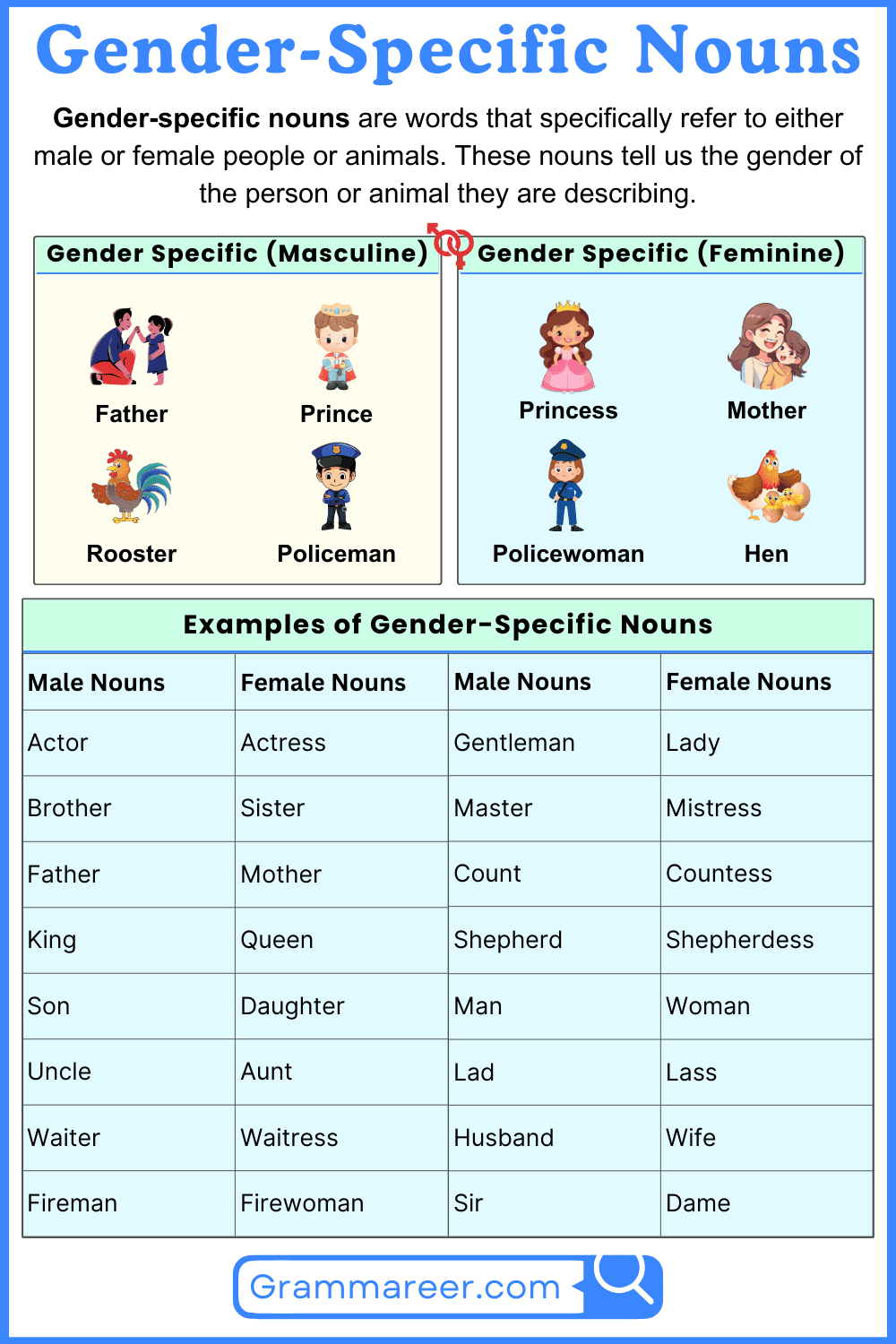
Gender Specific Nouns in English with Examples
Gender Specific Nouns in Sentences
Male Nouns
- The actor won an award for his performance.
- My brother is learning to play soccer.
- My father loves to cook on weekends.
- The king ruled the kingdom wisely.
- Their son is a great swimmer.
- My uncle visits us every summer.
- The waiter brought us our drinks quickly.
- The fireman rescued a cat from a tree.
- The policeman helped us find our lost dog.
- The duke hosted a grand party for his guests.
Female Nouns
- The actress performed beautifully in the play.
- My sister is my best friend.
- My mother is very supportive of my dreams.
- The queen greeted her people with a smile.
- Their daughter loves to paint and draw.
- My aunt has a lovely garden.
- The waitress took our order with a smile.
- The firewoman bravely fought the flames.
- The policewoman explained the rules to us.
- The duchess is known for her charitable work.
Common Mistakes to Avoid
Use gender-neutral terms:
- ❌ “fireman” ➔ ✅ “firefighter”
- ❌ “policeman” ➔ ✅ “police officer”
Choose the correct term based on gender:
- ❌ “actress” (for all) ➔ ✅ “actor” (or “actress” for female if preferred)
- ❌ “male nurse” ➔ ✅ “nurse” (for both genders)
Avoid outdated job titles:
- ❌ “stewardess” ➔ ✅ “flight attendant”
- ❌ “waitress” or “waiter” ➔ ✅ “server”
Adopt modern, neutral language:
- ❌ “chairman” ➔ ✅ “chairperson”
- ❌ “salesman” ➔ ✅ “salesperson”
Read More